Waterproof Roofing · Homeowner guide
Start with the condition the work must address
A roof leak does not automatically require replacement, and a roof's age does not explain every problem. Begin with an assessment of the affected area and the surrounding assembly. Ask what was found, which locations support the recommendation and what remains uncertain beneath the visible covering. Earlier repairs and leak history can help show whether the issue is contained or part of a wider pattern.
The goal is a decision based on the work needed. A local flashing defect may call for a different response than deterioration across multiple roof sections. If the assessment is limited by access, further investigation may be more useful than choosing a full reroof or another patch before the condition is understood.
Test whether a contained repair can be reliable
Repair can be appropriate when the defect is limited and adjacent materials can support a sound connection. The proposal should identify the damaged components, the area opened and how the repair joins retained roofing. A repair to shingles, tile underlayment or a commercial membrane involves different material and preparation requirements.
Ask what the completed repair would leave unresolved. Product availability and weathering can affect a visible match, while broader deterioration may limit repairability. A small surface defect can require more work below it, so the estimate should explain the entire repair rather than use the size of a ceiling stain as the measure of the job.
- What specific condition will the repair correct?
- Why are the surrounding components suitable to retain?
- Which concerns remain outside the proposed repair, and what follow-up do they need?
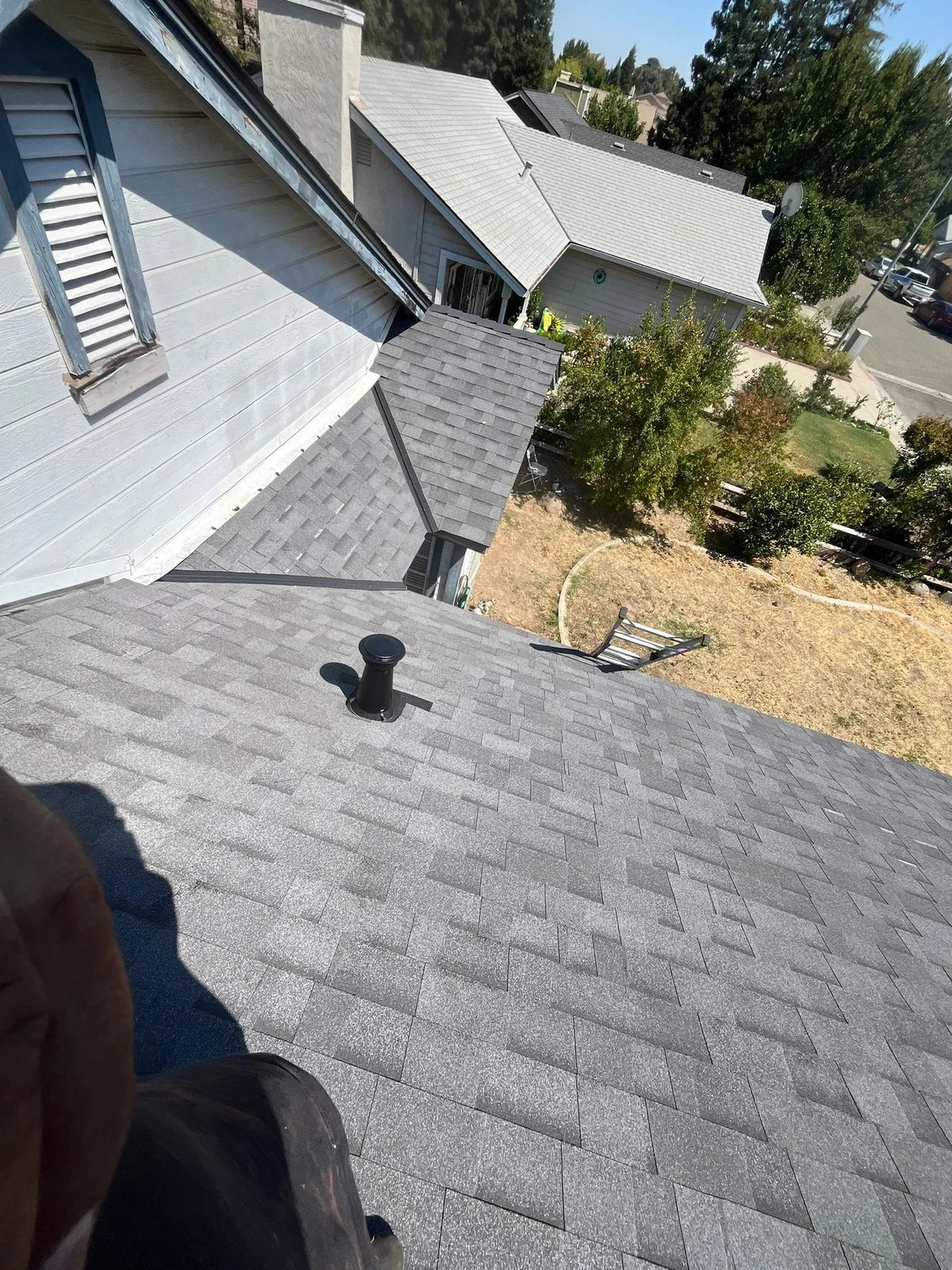 A closer look at the roof in front of you.
Understand when broader work deserves comparison
Repeated failures in separate areas, widespread wear or damage below the covering can make roof replacement worth evaluating. Request the findings behind that recommendation and a description of what will be removed. Replacement may address underlayment, flashing, deck repairs and appropriate ventilation as well as the visible material, depending on the roof and agreed scope.
Tile roofing illustrates why components need separate consideration: some tiles may remain usable even when broader work is needed beneath them. Ask whether lifting and reuse is appropriate and what limitations apply. Do not assume that a mostly intact visible covering proves the whole assembly is sound, or that underlying repair automatically requires discarding every tile.
Keep recover and restoration distinct from replacement
For eligible low slope assemblies, a recover may add a compatible new system over suitable retained materials. It differs from replacement that removes specified existing components. Current condition, moisture, attachment requirements and applicable rules affect whether a recover is appropriate. Wet or deteriorated materials require an explicit response rather than concealment.
A coating may also be an option for a compatible roof that qualifies, but needed repairs and preparation come first. It is not a substitute for damaged decking or wider failure. Installed asphalt shingles are not a routine coating surface; ARMA advises against field-applied coatings on them. Compare these alternatives only after their suitability and the conditions they retain are explained.
Compare complete scopes and the years of care ahead
Ask each proposal to describe materials, removal, preparation, supporting components, disposal and any conditions excluded. Area, slope, access, material choice and concealed repairs affect price. Agree how newly discovered damage will be documented, priced and approved. A lower total does not establish better value if the bids include different work or leave different problems unresolved.
Scheduling, access and future maintenance also belong in the decision. Review the actual workmanship and manufacturer warranty terms for the proposed system, including eligibility, exclusions and required registration or care. A headline duration does not establish identical coverage. Keep the chosen scope and completion records together so later inspections can evaluate the roof with a clear account of what was repaired, retained or replaced.
- Compare repair and replacement on the same documented condition findings.
- Ask what each approach removes, retains and changes at roof connections.
- Review the construction schedule, hidden-damage process and written coverage before approving the project.
- GAF: Roof repair guidance
- GAF: Commercial roof recover guidance
- ARMA: Coating asphalt shingles after installation
- GAF: Understanding roof warranties
- CSLB: Written scope and change orders
General guidance helps you prepare. A recommendation for your property depends on its roof and the applicable product instructions.
Talk about your roof.
Waterproof Roofing serves Fresno, Madera, Visalia, Merced and Hanford, with additional service in Clovis and nearby communities. Call (559) 770 3064 to discuss your property.
Get a free estimate